Research project Well-structured soil, climate-smart soil management


General introduction
The application of mulch to agricultural soil is a promising technique for buffering extremes caused by climate change and ensuring more stable yields. This was the conclusion from the results of the Soilstruct project. Experiments were conducted in both Flemish arable farming and in the open field vegetable sector, both conventional and organic. In particular, it concerned the drought-sensitive crops potato and celery (celeriac). The use of mulch is not easy in practice, as it affects not only water management but also nutrient dynamics. Mulching must therefore be done in a well-considered manner. The dos and don'ts have been clarified with SOILSTRUCT.
Research approach
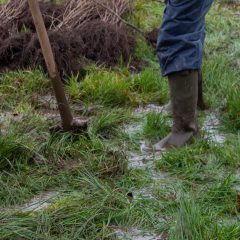
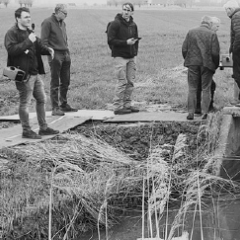
We took a participatory approach, identifying common practices among growers. This provided information to design practice-relevant experiments that were carried out on trial fields and under drought-controlled conditions in ILVO's HYDRAS (HYdrology, Drones and RAinout Shelters) infrastructure. Furthermore, mulch field experiments were done on plots at both conventional and organic growers and at Inagro.
Relevance/Valorization
Mulching focuses on the problem of extreme weather conditions, both prolonged drought and excessive rainfall, which jeopardize crop yields. These weather conditions can be detrimental to soil structure, hindering crop development. The mulching experiments have proven the added value of this technique. You cannot control the weather, but you can control the mulch material you apply.
Financing
Vlaamse Overheid Departement L&V