Research project Development of an innovative and lighter chain mat for beam trawl fishing.

General introduction
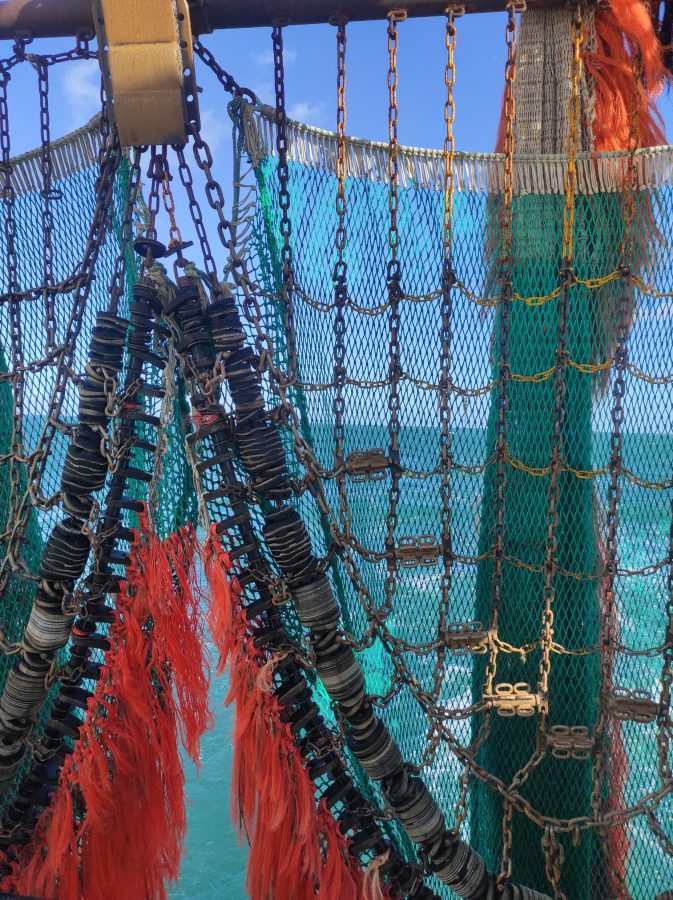
What beneficial effects on energy consumption of fishing vessels, seabed disturbance, catch composition and survival rate of bycatch can we obtain with an innovative chain mat in the beam trawl? In this research project, ILVO, together with the sector, is conducting experiments with a new type of fishing gear, namely a lighter, more efficient chain mat, a matrix of horizontal and vertical chains that drags across the seabed in front of the net opening. The mat traditionally combines two functions: startling flatfish such as sole and plaice so they enter the net, as well as holding back coarse material such as stones that can cause damage to the catch or the net. The goal is to cleverly de-duplicate the functions and still obtain the desired effects, and decent catch and risk control.
Research approach
There are two development paths: 1/ The Catch Optimization Component (VOC) should startle flatfish from the bottom efficiently(er). We are developing different VOCs and testing them using drag tank trials. 2/ The shape of the (remaining, redesigned) chain mat is changed, as it should now only keep stones and other inorganic material out of the net. Our goal is to obtain a lighter fishing gear as a final result. The most promising designs are being evaluated aboard research and commercial vessels. Results are shared through workshops and consultations with fishermen and policy makers.
Relevance/Valorization
The project responds to a clear need. Beam trawling is under pressure because of its ecological footprint and increasing sustainability requirements from policy and the market. "Innovative Chain Mat" aims to provide a concrete and quickly applicable alternative that combines ecological and economic sustainability. We hope to contribute to a future-proof Belgian fishing industry. By reducing the fuel consumption of vessels, the project contributes directly to the reduction of CO2 emissions and lowers the operational costs of our shipping companies. Reducing bottom impacts protects the marine ecosystem, crucial for a sustainable future of our fishing fleet. By increasing catch efficiency and reducing unwanted bycatch, we ensure clean catches, responding to growing consumer demand for sustainable and quality food.
Financing
EFMZVA
FIVA