Research project Good management of winter weeds in organic arable and vegetable farming

General introduction
Why - under what conditions exactly - do the three winter weeds bird's-foot, meadow grass and true camomile grow ever better, and which of our hypothetical management strategies works in an agroecological agricultural practice (with no-till)? This is the research question of the WIONKRUBIO project. Partly because of climate change, weeds are a growing problem in agriculture. This is because they can develop strongly in warm and moist winter conditions. Bird's-foot and meadow grass now appear almost all year round and true camomile appears after soil tillage until late in the autumn. In winter cereals, these weeds are difficult to control, but also in vegetable cultivation these weeds cause problems during spring sowing or planting bed preparation, especially in systems of non-rotational tillage.
Research approach
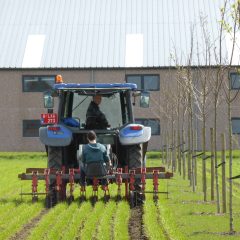
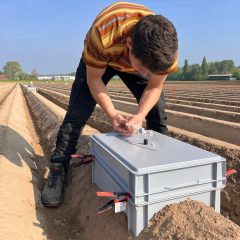
On the basis of seed bank samples taken from 50 organic plots spread across the whole of Flanders, we examine whether the seed bank size of the winter weeds in question correlates on the one hand with the cultural-technical management practiced (a.o. crop rotation, soil management, weed management). From the analysis, we select the more successful real-practice handles as potentially better management of these problematic weeds. We establish our own field trials in which we test certain strategies to control these winter weeds. Some hypotheses are: (1) the use of species-rich green cover crops in the fall in vegetable crops; (2) specific cultural interventions in the fall for winter cereals; (3) bringing forward the sowing date.
Relevance/Valorization
Grain cultivation and systems of no-till are soil health promoting measures, but unfortunately bring problems with weed pressure. Understanding the conditions in which the winter weeds street grass, bird's-foot and true camomile thrive should result in the development of workable management methods.
Financing
Agentschap Landbouw & Zeevisserij