Research project Systems approach for the control of Fusarium oxysporum f.sp. lactucae in leafy vegetables - FoSSy

General introduction
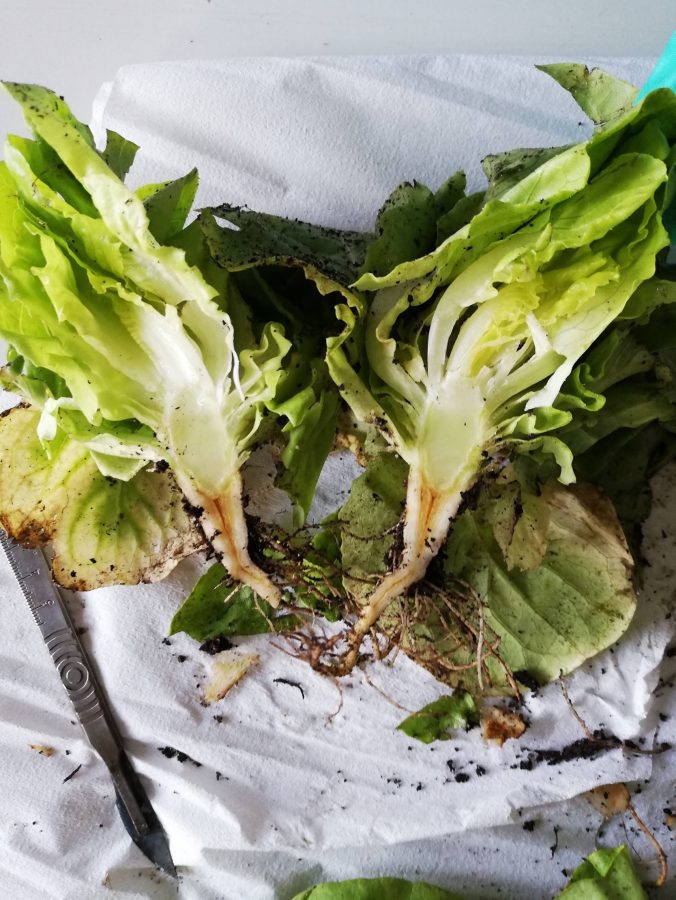
Rotating with alternative (lettuce) crops to prevent the pathogen from latently multiplying has proven to be one of the more effective measures to protect the field-grown lettuce sector from Fusarium oxysporum f.sp. lactucae (Fol). This was concluded by researchers following the completion of the FOSSY project. No adequate control measures were available for this fungal disease in lettuce, of which a new variant (race 4, or Fol4) had been introduced and was spreading relatively rapidly in the field-grown lettuce sector. Using the systems approach, a package of measures and techniques is now being offered to growers to keep Fol under control. ILVO was primarily involved in the successful development of specific detection technology for Fol4 and supported the project partners in using this technology to determine its introduction and spread and in evaluating control measures and host plant resistance.
Research approach
We developed specific molecular detection technology for Fol4 (and Fol1, a different race that’s also present in Flanders). This technology was used extensively, together with project partners, in evaluating bioassays with various lettuce varieties and alternative crops, and in conducting efficacy trials on soil disinfection and crop protection products, among other things. The detection technology also provided us with greater insight into the fungus's introduction and spread pathways, the distribution of Fol4 in the soil, and the effectiveness of hygiene measures. We also identified a new race (Fol4+), capable of overcoming the rapidly introduced partial resistance of some varieties.
Relevance/Valorization
The greenhouse lettuce production sector generated a turnover of €27.13 million in 2018, involving 235 growers and 205 hectares. Because up to six crops are grown annually, the actual area devoted to head lettuce is 682 hectares. Production and supply to auctions declined due to the acute and dramatic problems caused by Fusarium. Research contributed to controlling Fol by identifying the most effective measures. The most important measures were adhering to the recommended hygiene measures, tailoring variety selection to existing varieties, crop rotation, and, if necessary, the use of vacuum soil steaming. Intensive head lettuce cultivation in soil will again be possible when new resistant varieties become available. However, each time a new strain breaks through, the sector suffers serious losses, as soil disinfection is becoming less and less of an option due to regulations or energy prices. Although it's not easy to accomplish, rotation will inevitably have to increase. This information was communicated to the sector.
Financing
VLAIO