Research project Soil biodiversity and ecosystem services under different land use: drivers, resilience and economic impact.
Linking soil biodiversity and ecosystem functions and services in different land uses: from the identification of drivers, pressures and climate change resilience to their economic valuation.


General introduction
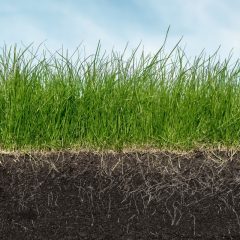
In what precise ways are soil organisms involved in the functioning of certain ecosystem services? The BIOSERVICES project is working to further elucidate external influences that stimulate or suppress biodiversity, relationships between key soil organisms and soil structure and other ecosystem functions. The effect of climate change on soil life stability and adaptation is also a focus of the researchers.
Research approach
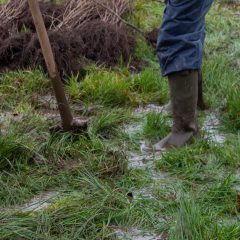
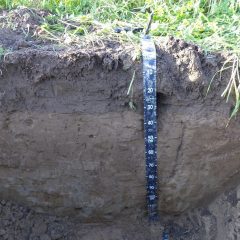
Soil samples from 25 locations ("lighthouses") distributed across five European biogeographic regions are collected. These represent eight different land uses (urban, industrial, agricultural, forestry, mining, (semi)-natural, wetland and dryland). Three different management intensities will be selected per land use to assess pressures and drivers,. The soil biodiversity (archaea, bacteria, fungi, protists, nematodes, microarthropods, earthworms, isopods, millipedes, insects and spiders) and ecosystem functions and services by measures of specific variables are determined. Experiments with open chambers and rain shelters will be organised to investigate the adaptation capacity and resilience to climate change by the soil organisms. Computational tools with Artificial Intelligence will be applied to upscale the experimental results.
Relevance/Valorization
Commercialized and non-commercialized economic values of ecosystem services for investment are still underutilized. BIOSERVICES will deliver (i) new knowledge on key soil organisms or indicators related to ecosystem functions and services and climate change, (ii) digital decision-support tools and models, and (iii) recommendations for decision makers and policy makers to more easily decide upon the best strategies to enhance the delivery of ecosystem services in a changing climate, to conduct monitoring and restoration programmes, to promote private and public investments in soil health, and to facilitate implementation by landowners.
Financing
EU Horizon Europe