Research project Further exploration of appetite signals for optimized feed intake in pigs


General introduction
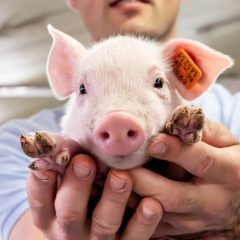
What are the underlying mechanisms behind anorexia in piglets immediately after weaning, and what can be done about it? These questions are the subject of doctoral research (KU Leuven, UNIBO, and ILVO) in the FEASTPIG research project. Some piglets stop eating when they are removed from the sow after about 28 days.
However, good feed intake is essential for healthy growth in piglets, especially around weaning. A number of influencing factors are already known, but the biological regulation of appetite remains largely misunderstood. This project investigates how birth weight, amino acid composition, and microbiota together influence appetite. The ultimate goal is to reduce the incidence of anorexia after weaning and to optimize feed intake.
Research approach
We start with an animal study at UNIBO, in which we monitor individual feed intake in piglets with different birth weights. We analyze microbiota, metabolites, hormones, and neuropeptides in the intestine and brain using LC-MS, ELISA, qPCR, and immunohistochemistry. In a second trial at ILVO, we test six diets in piglets housed in groups. The feeds differ in lysine content and branched-chain amino acid levels. We are investigating the hypothesis that amino acid balance is more important for appetite than absolute quantities. A third trial at UNIBO evaluates the relationship between amino acid levels and birth weights.
Relevance/Valorization
By better understanding appetite regulation, we can develop strategies to improve feed intake after weaning. This enhances gut health, reduces disease and antibiotic use, and improves efficiency. The project contributes to more sustainable pig farming with a lower ecological footprint. Insights into the role of amino acids and microbial metabolites pave the way for biostimulants and innovative feeds. The results are relevant for researchers, feed specialists, and farmers, supporting animal welfare as well as economic and ecological sustainability.
Financing
Adisseo