Research project (A)biotic stress tolerance in Ilex crenata: high soil pH and the pathogen Berkeleyomyces basicola
General introduction
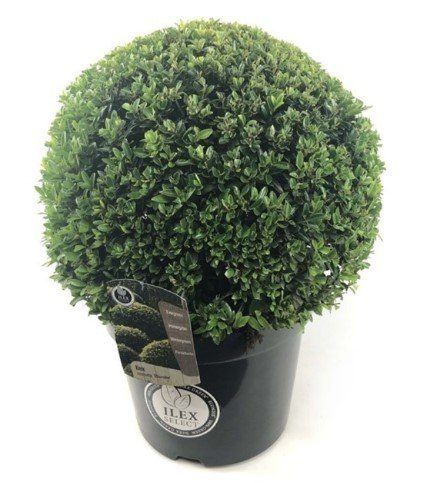
This research project, commissioned by Plant Select, investigated the possibility of using breeding to develop Japanese holly (Ilex crenata) with improved tolerance to high soil pH and the soil fungus Berkeleyomyces basicola (formerly Thielaviopsis basicola, syn. Chalara elegans). To this end, various techniques were developed to support the breeding process. Screening approximately 100 genotypes proved valuable for identifying potential genetic sources with the desired tolerances. The researchers were able to demonstrate that the fern midge plays a significant role in introducing this fungus into the production chain. Like Buxus, Ilex crenata is used as a hedge plant or in various topiary forms. Ilex crenata (Japanese holly) is used as an alternative to boxwood which has lost popularity because of the boxwood moth. Differences in soil requirements between Buxus and Ilex crenata can cause problems in the garden. Unlike boxwood, I. crenata prefers a low soil pH. Soils of Flemish gardens often have a high pH due to the use of hard surfaces and calcareous pebbles. The soil fungus Berkeleyomyces basicola (formerly Thielaviopsis basicola, syn. Chalara elegans) can also cause problems with I. crenata, especially at high soil pH.
Research approach
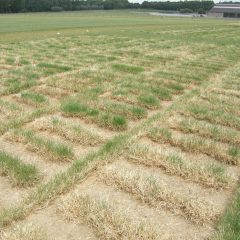
The researchers first mapped the genetic and phenotypic variation within Ilex crenata and relevant related species. This was carried out on approximately 100 genotypes and proved valuable for identifying potential genetic sources for tolerance to high pH and disease resistance. Next, bioassays were developed to screen Ilex genotypes for pH and disease susceptibility. These protocols are available and have been validated on a collection of Ilex genotypes. It is now also clear that setting up a field trial for multi-year screening for pH stress is feasible. Third, the introduction of Berkeleyomyces basicola into the production chain was studied. The genetic and phenotypic variation within the fungus demonstrated that this occurs early in the chain and that fern midge flies likely play a role. The research was expanded with the development of a qPCR protocol, enabling companies to detect the fungus themselves, even in very small quantities. The qPCR assay proved its usefulness in virulence tests and bioassays to quantify infection by Berkeleyomyces and can also be used in future bioassays to assess tolerance to this fungus.
Relevance/Valorization
Greater insight was gained into the interactions between plants, soil fungi, and soil pH. The knowledge and results obtained now make it possible to take the first steps toward the targeted and strategic breeding of a new range of Ilex crenata varieties that are better suited for sustainable use in gardens. Breeding for more resistant I. crenata genotypes is underway at the partner company; the first cultivars are expected in the coming years. The results were published in two scientific journals.
Financing
VLAIO