Research project Low carbon and energy efficient innovations for more climate neutral greenhouse horticulture

General introduction
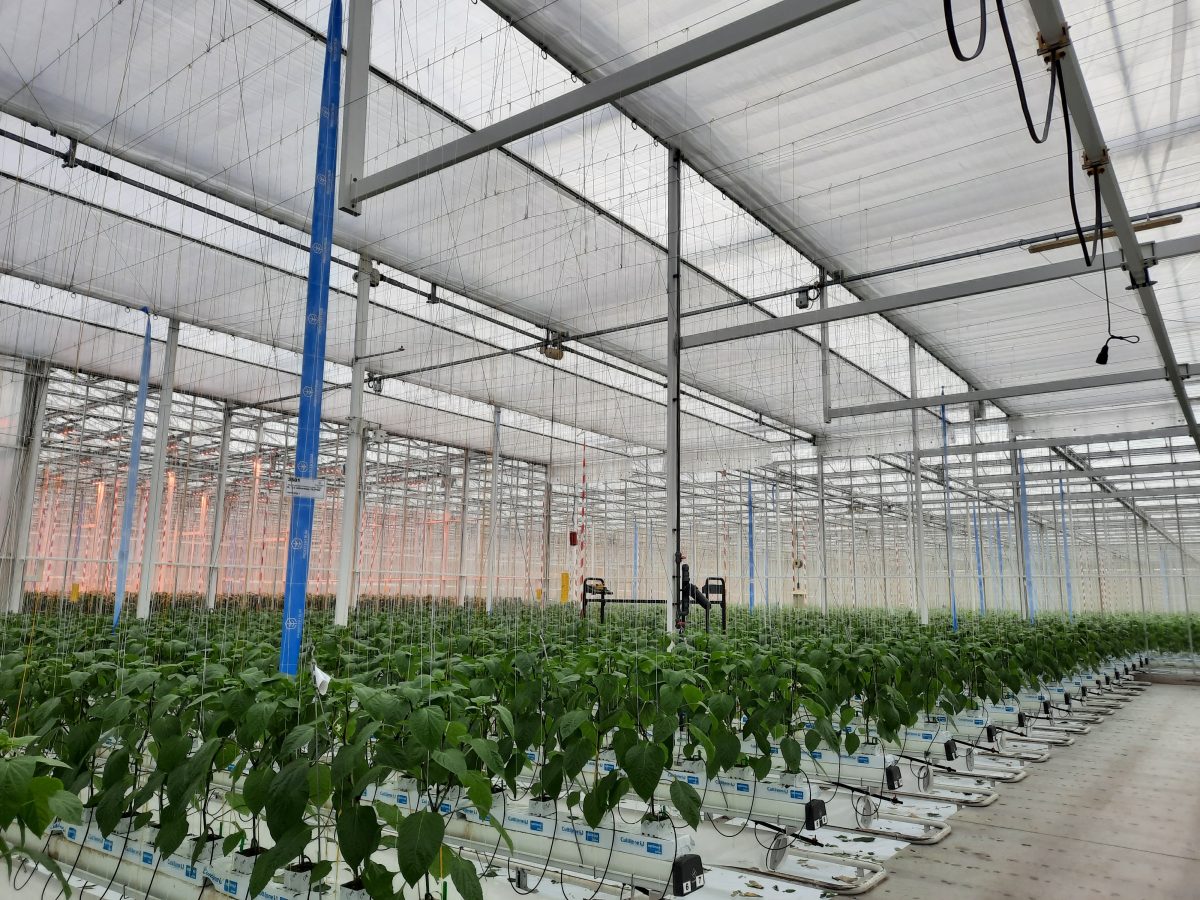
ENERGLIK wants to show how climate-neutral greenhouse farming and economically profitable greenhouse farming can track together. The challenge for this sector is no small one: The climate objectives aim for a 44% reduction in energy consumption by 2030. Thanks to innovation and co-creation, steps have already been taken within, among others, the preceding projects EXEKas and Glitch (by 13 Flemish and Dutch-Limburg companies and knowledge centers, including ILVO). ENERGLIK now focuses further on CO2 emission reduction and practical high-tech solutions such as the application of day and night screens in greenhouses.
Research approach
The tests and deployments are again taking place in Flemish and Dutch greenhouses in the border region of the Flanders-Netherlands. ENERGLIK is developing 4 innovation tracks: (1) the use of insulating screens, (2) a vapor heat pump, (3) flue gas CO2 storage and dosing and (4) a mold sensor. We build on the project results of (1) the EXE greenhouse project where the vapor heat pump and energy balancing day screens were developed and (2) GLITCH where night and day screens were further developed and applied in the greenhouse with 65% energy savings as a promising result. Within ENERGLIK, the step to practice is further developed through demonstration trials at the pilot centers and a pilot company. The environmental sustainability and economic feasibility of the innovation paths will be quantified and a roadmap will be drawn up describing how these techniques can contribute to achieving effectively climate-neutral greenhouse horticulture by 2050.
Relevance/Valorization
The greenhouse horticulture sector in the Belgium-Netherlands border region is among the absolute world leaders. A climate-neutral(er) greenhouse horticulture strengthens their position, which is currently heavily dependent on energy prices and/or subsidy systems. The sector can also benefit from a greener image. The techniques under development are applicable to most energy-intensive greenhouse crops.
Financing
Europees Fonds voor Regionale Ontwikkeling (EFRO)
ILVO - Instituut voor Landbouw-, Visserij- en voedingsonderzoek
Provincie Oost-Vlaanderen
VLAIO