Research project Ornamental cultivation moves to a higher level

General introduction
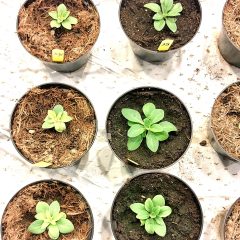
Floriculture using a multi-layer system can achieve significant water savings and reduce the need for crop protection products. This is evident from the research project “FLORICULTURE IN MULTI-LAYERS.” Thanks to this project, growers can now make more informed decisions and produce more efficiently, thanks to AI-driven systems for automated crop monitoring and the detection of diseases and pests. Technical knowledge regarding the cultivation of plants in controlled environments under LED lighting has increased significantly in recent years. This project addressed knowledge gaps in the areas of adequate remote systems for crop monitoring and tracking, energy efficiency, climate homogeneity (including dehumidification), and environmental impact.
Research approach
The conversion of greenhouse cultivation to closed multilayer cultivation requires the necessary (cultivation) technical optimizations, since everything must be minutely controlled. The most important needs are: (1) automatic monitoring of crop development, (2) remote online scouting tool of pests and diseases between the cultivation layers and (3) calculation models to work out technical aspects of the multilayer cultivation system on desk. At the system level, (4) conceptual thinking about how a multilayer cropping system should be structured at the grower.
Relevance/Valorization
This project fulfilled its aim to fill essential knowledge gaps. The project provided the Flemish floriculture sector with new knowledge, tools, and practical experience in multi-tier cultivation, artificial intelligence, and sustainable crop production. It is expected that year-round vertical cultivation of plants in multiple layers under fully controlled conditions will offer significant added value: a consistent, high-quality ornamental plant product, perfectly timed to meet market demand, with a reduced environmental impact and more manageable energy requirements. This research provides previously lacking data on issues such as energy efficiency/energy consumption, climate homogeneity in the multi-tier system (including dehumidification), and environmental impact.
The results have been widely disseminated through demonstration trials, seminars, farm visits, publications, and individual guidance, reaching more than 200 companies. There have already been concrete investments by companies in multi-layer cultivation systems, UV-C technology, and innovative LED lighting.
Finally, this project also serves as the foundation for new research and innovation projects, thereby strengthening the further digitization, sustainability, and competitiveness of the Flemish ornamental plant sector.
Financing
VLAIO