Research project Wood fiber substrates as an alternative to peat for a future more sustainable technology-based horticulture industry

General introduction
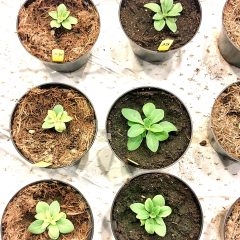
For strawberries in greenhouses, wood fiber substrates based on Norway spruce can be used successfully as an alternative to peat-based substrates . This is one of the most striking results of the international research project SUBTECH. The project aimed to develop environmentally friendly, peat-free cultivation substrates based on a renewable resource such as wood fiber.
Phasing out peat use in horticulture and ornamentals contributes meaningfully to reducing greenhouse gas emissions and thus making the sector more sustainable. This project had a link to Norway: In the past hundred years, about one-third of the peatlands there have been destroyed by the exploitation of peat as a horticultural substrate. Persistent political pressure to reduce peat use is translating into restrictions.
Research approach
The researchers knew that using wood fiber as a peat substitute was not going to be an easy conversion for horticulture. Therefore, they planned to work on precision fertilization based on models (Big Data) and sensor technology. They aimed to reduce environmental impact and water losses, as well as increase yields and crop quality.
Partners from Norway helped support the developments of peat alternatives in SUBTECH.
Fertilization and watering have been optimized for these new substrate mixtures based on sensor monitoring. Promising mixtures can now be further tested and evaluated by Norwegian growers.
Relevance/Valorization
SUBTECH fundamentally changed the way of thinking about cultivation substrates. A follow-up project (SUBTECH2.0) is already underway. At the end of this project, new functional wood fiber-based cultivation substrates for professional greenhouse farming were developed and tested. The RE-use of the wood fiber substrate also gave positive results. Meanwhile, new knowledge about plant nutrition and sensor-based fertigation is leading to a better understanding of plant physiology and more resource-efficient precision horticulture. This new knowledge on cultivation in sustainable wood fiber substrates was summarized and communicated.
Financing
Norwegian Research Council