Press release Guidance helps Flemish dairy farmers reduce climate impact
Dairy farms that feed efficiently, achieve high milk production per cow, and manage their (young) cattle well have the lowest climate impact. This is evident from a thorough analysis of the 550 KLIMREK scans conducted between 2021 and 2023 at 320 Flemish dairy farms. A higher grazing percentage is also beneficial for the climate impact, while an increase in the number of cows or the scale of the farm has neither a positive nor a negative impact in itself. Finally, those who have their impact calculated annually and make systematic adjustments actually achieve a continuous reduction. KLIMREK is the climate scan developed by ILVO and Boerenbond with the support of MilkBE.
The production of 1 liter of milk in Flanders releases an average of 1.00 kg of greenhouse gases, but behind that average there is a wide variation between farms. The climate impact varies from 0.64 to 1.76 kg CO2 equivalents per kilo of milk. Why is that?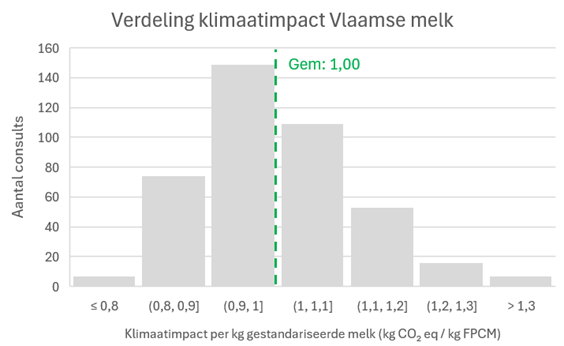
Milk production
Farms with higher milk production per cow generally have a lower climate impact per kilogram of milk. This is largely explained by the distribution of emissions over a larger production volume, but not entirely. Intensification of production in itself is not a sufficient climate measure, nor is scale in the sense of more cows per farm. Analysis of the differences between the best and worst performing farms shows that the number of cows (scale) does not play a role. Although very small farms tend to perform poorly, the top group also includes farms with fewer cows than the farms in the middle range.
Veerle Van linden, project coordinator and ILVO researcher: “Farms that achieve high milk production by focusing on efficient feeding and paying close attention to animal health, especially during calf rearing but also afterwards, generally score the best.
Cattle management
A lower calving age and a lower replacement rate mean that a farm needs to keep fewer (non-lactating) young cattle, which reduces the farm's climate impact. Earlier calving due to well-growing young stock can also lead to higher milk production over the animals' total lifespan, which in turn reduces the climate impact per cow.
Feed management and manure storage
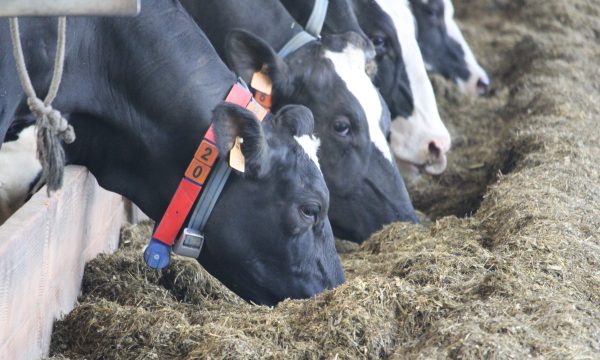
When it comes to feed, efficiency and quality are important. Higher feed efficiency results in a lower climate impact per unit of milk, while high soy consumption is linked to a higher impact per unit of milk and per animal.
Veerle Van linden (ILVO): “Producing high-quality roughage such as grass and grass clover yourself and using purchased concentrate feed sparingly, so that the cows achieve high feed conversion with minimal use of soy, is an effective climate measure.
Grazing, which allows manure to be spread directly on pastures during the summer and reduces the amount of time it needs to be stored on the farm, is also generally associated with a lower climate impact.
Biggest impact
In terms of feed purchases (soy) and manure storage, dairy farms with lower average scores still have the most room for improvement. The difference between the best and worst groups in this area is a doubling of the climate impact. When it comes to feed purchases, it is not so much a question of using less soy, but rather of converting it efficiently into milk. For example, the top team produces an average of 39.5 kg of milk per kilogram of soy fed, while the worst group produces only 16.5 kg of milk per kilogram of soy.
Veerle Van linden (ILVO): “The good news is that changes in feed management can usually be implemented in the short term, whereas changes in manure storage require investment and therefore long-term planning. This calls for continuous monitoring and tailored advice.
Advice works
It is striking that the farms that performed the KLIMREK scan each year, around 80 in total, did indeed show a downward trend.
"This suggests that the KLIMREK scan and the guidance provided by consultants are bearing fruit," says Veerle Van Linden (ILVO). "By conducting the scan annually, we also gain a better understanding of the influence of external factors. Sometimes a farmer may take an important measure that does not immediately translate into a lower climate impact due to external factors such as the weather or a disease outbreak. It is important that we understand how this works, so that farmers can gain more control over their own footprint and make more targeted adjustments."
Finally, the researchers conclude that, in general, measures that improve climate impact also have a positive effect on other environmental issues, such as ammonia (nitrogen) emissions.
A case from Essen, Belgium: The milk from farmer Jan
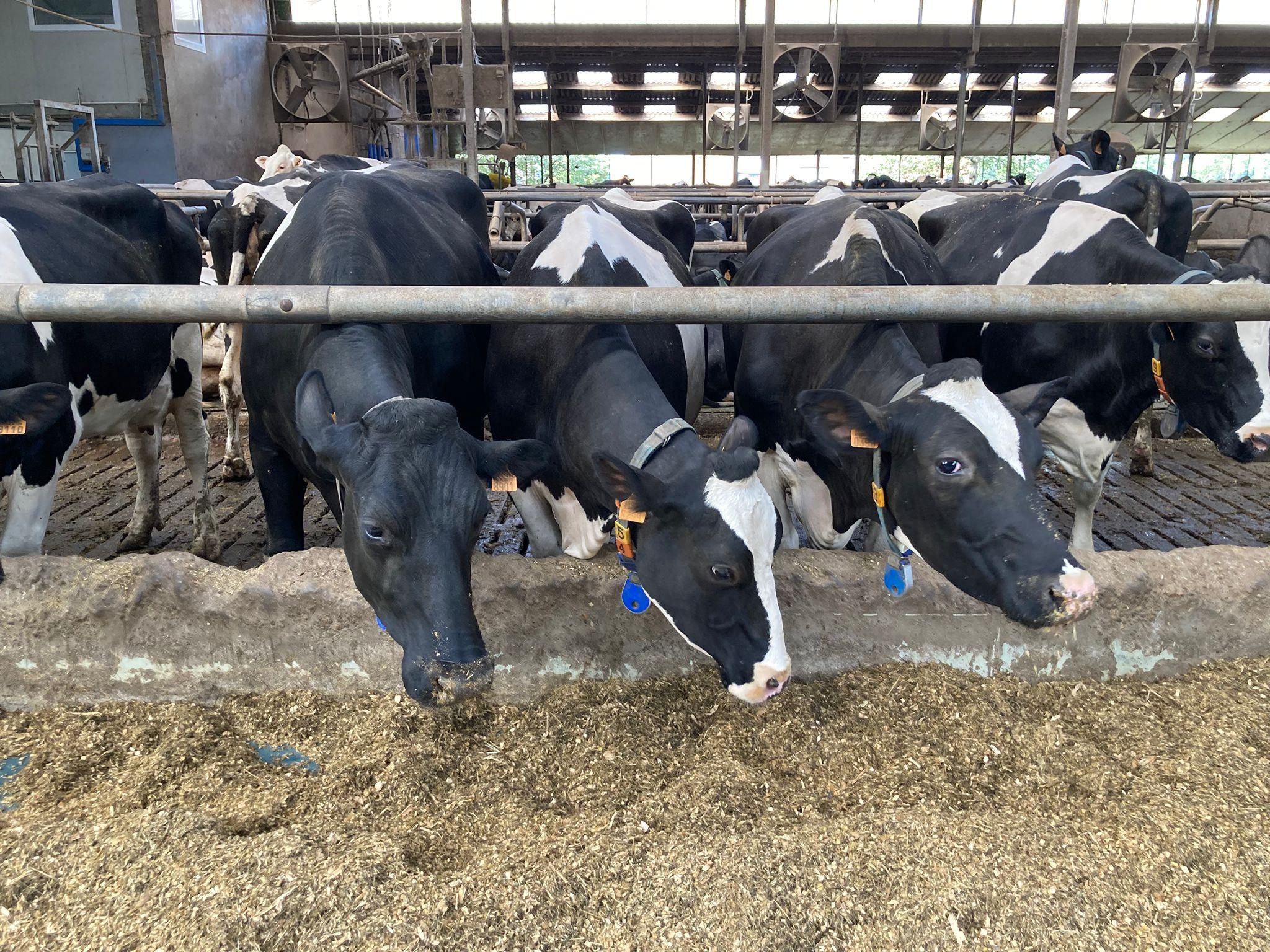
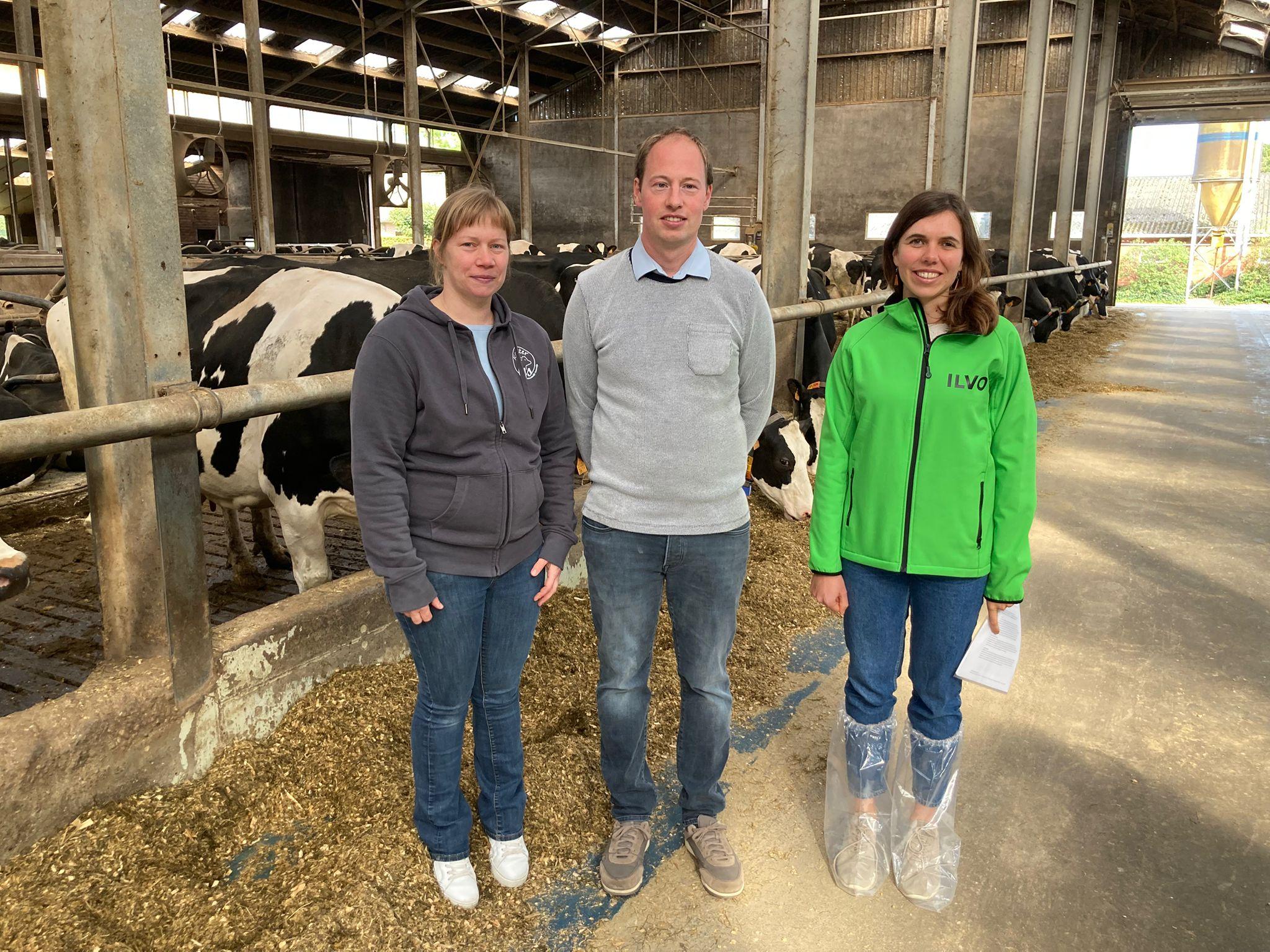
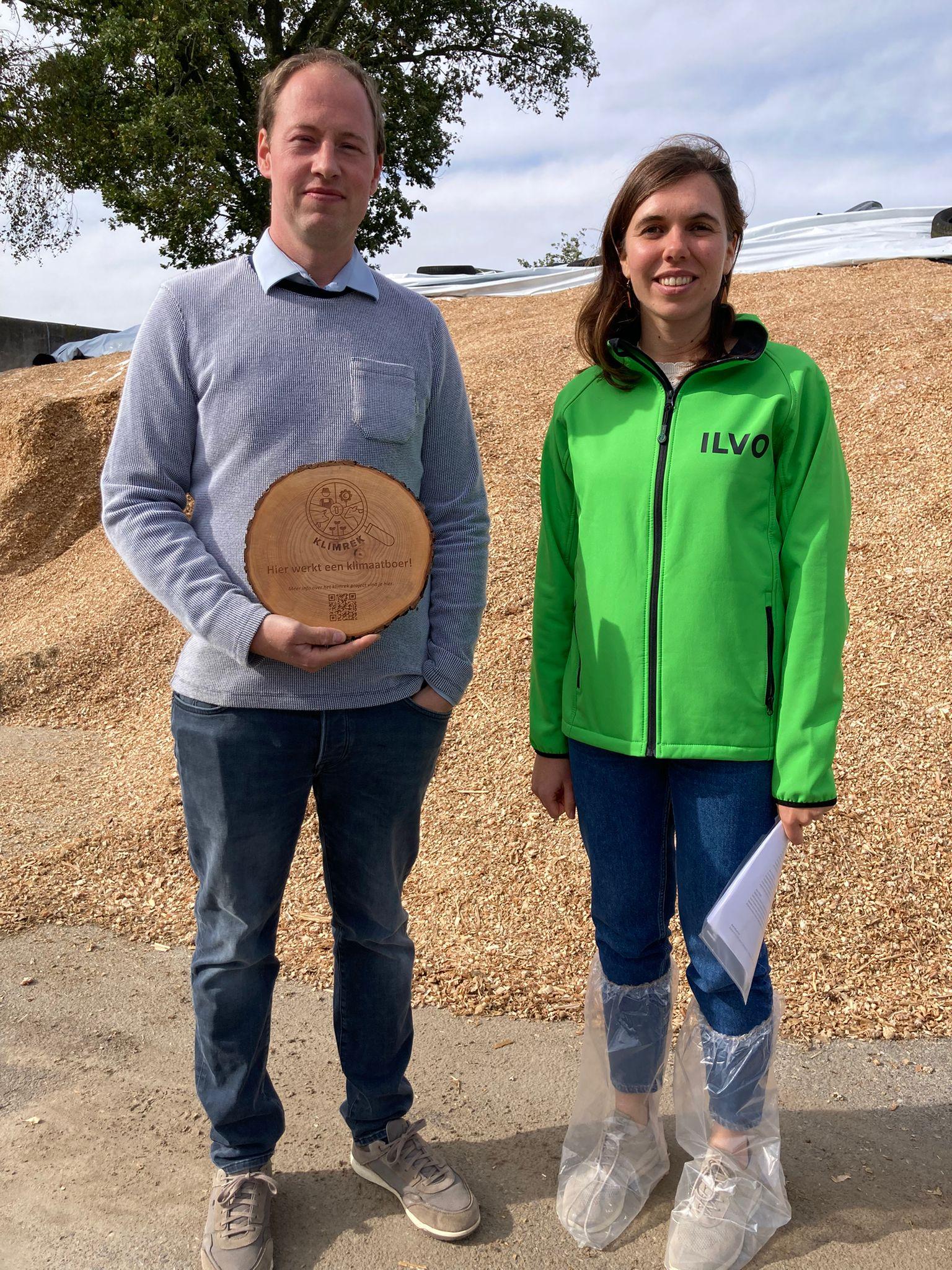
Jan Van den Keybus is a dairy farmer in Essen, close to Antwerp. His herd consists of 300 dairy cows. He has had a climate scan carried out every year for the past three years and has been able to systematically reduce his climate impact by focusing on efficient feed management and high milk yield. His milk scores better than average, with 0.86 kg of CO2 equivalents of greenhouse gases per liter.
Jan van den Keybus, deelnemer KLIMREK: “I am proud that we score better than the Flemish average. We make a lot of effort to improve the health and milk yield of our cows and to adjust their feed ration accordingly. Every year is about anticipating in order to work as efficiently as possible. It is therefore an added value that I can extract so much information about my operations from the analyses and that I can decide for myself what additional measures I want to take to further improve my climate impact. Because every change has an impact on our business operations, but I also don't want to lose sight of the financial picture. Green farming with red figures is not an option either. ”
Further investment in climate scans
Chair of the Farmers Union Boerebond, Lode Ceyssens: “The previous analysis by KLIMREK showed that our Flemish cow's milk is the most climate-friendly in the world. We can be proud of that. Today, we see that our dairy farmers are continuing their efforts to further reduce greenhouse gas emissions and produce climate-friendly milk. The results once again demonstrate the need to maintain and support our own local dairy farming rather than phasing it out. The added value of KLIMREK lies not only in the calculation model, but above all in the personalized advice and the focus on measures that are appropriate for the business. That is why the Flemish Energy and Climate Plan also focuses on the climate scan and a selection menu for dairy farmers. Together with Boerenbond, we will therefore continue to invest in KLIMREK modules for dairy farmers and other sectors."
MilkBE, the trade association for the Belgian dairy sector, which represents both dairy farmers and dairy processing companies, supports a faster rollout of climate scans, including KLIMREK.
Lien Callewaert, vice-president of MilkBE: “More than a year ago, we emphasized the importance of individual climate scans in our Sustainability Charter. These results confirm our vision: scanning gets companies moving and stimulates continuous improvement. I particularly remember the importance of focusing on efficiency, as this offers us great potential at the sector level. These are important insights that we at MilkBE will continue to promote.
About the KLIMREK climate scan
Klimrek stands for 'Climate Measures with Economic Opportunities on the Farm'. ILVO coordinates research, while Boerenbond and MilkBe are partners for climate scans in dairy farming. KLIMREK has a digital calculation tool linked to the most up-to-date calculation factors and methods. The climate consultants are trained (and certified) to develop scenarios based on the strengths and weaknesses of the farm. For each proposed measure, the farmer receives an overview page showing the predicted climate effects and a cost-benefit calculation.
In September 2025, the KLIMREK partners will present the results of three years of research in dairy farming.Meer info
Het nieuwe rapport is raadpleegbaar via https://doi.org/10.71493/acc1c5eb-47ba-4e9a-8120-1241db597dc4.
Tessa De Prins - Woordvoerder, Boerenbond - tessa.de.prins@boerenbond.be
Jolien Willems - Secretaris, MilkBE - jolien.willems@milkbe.org
Over ILVO
Het Instituut voor Landbouw- en Visserijonderzoek (ILVO) is een publieke wetenschappelijke instelling van de Vlaamse overheid gericht op duurzame landbouw, visserij en voeding. 750 medewerkers verrichten er toegepast onderzoek en leveren hooggespecialiseerde diensten voor actoren in de brede agrovoedingssector. ILVO mikt met zijn continue opbouw van basis- en toegepaste kennis op de verbetering van primaire producten (plantaardig en dierlijk), op economisch en ecologisch slimmere productiemethoden, op de meest geavanceerde bewaking van kwaliteit en veiligheid van de eindproducten (voeding en andere) en op beleidsinstrumenten als basis van sectorontwikkeling en agrarisch plattelandsbeleid. Meer info op www.ilvo.vlaanderen.be.
Over Boerenbond
In overleg met de maatschappij wil Boerenbond als landbouworganisatie bouwen aan een levenskrachtige, duurzame land- en tuinbouw. Deze duurzaamheid vertaalt zich op vier terreinen: ecologisch, economisch, sociaal en maatschappelijk. Boerenbond zet naast de belangenverdediging ook in op innovatie en onderzoek en wil daarmee de Vlaamse landbouw uitbouwen tot een innovatieve sector die klaar staat voor de uitdagingen van de toekomst.
Over MilkBE
MilkBE is de erkende brancheorganisatie voor de Belgische zuivelsector die enerzijds producenten van melk en anderzijds kopers en verwerkers van melk vertegenwoordigen. MilkBE is actief op terreinen waar de samenwerking tussen de schakels in de zuivelketen tot meerwaarde leidt. Dit geldt in het bijzonder op het vlak van kwaliteit en samenstelling van de melk, voedselveiligheid, duurzaamheid in de keten en relaties tussen de producenten en de zuivelindustrie.