Research project Increasing the production of mycosporin-type amino acids in microalgae for application in bio-refinery


General introduction
Can we increase the production of high-value compounds in microalgae by using optimal growth conditions and genome engineering? To answer this question, the CrisprMicroAlgen project will use the microalgae Chlorella as a case study with mycosporin-like amino acids (MAA) as high-value compound. MAA are water-soluble molecules that can absorb UV-A and UV-B radiation. In products such as sunscreens these may be valorised as a bio-based component with a high photoprotective factor.
Research approach
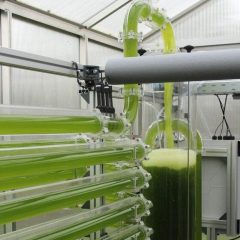
We aim to increase Chlorella biomass with high MAA content by 1) selecting the optimal microalgae strain, 2) developing the optimal culture system and 3) choosing the best metabolic engineering technique. First, candidate MAA-biosynthesis genes in Chlorella will be identified using comparative genomics. Simultaneously, a CRISPR/Cas toolbox to verify the candidate MAA-biosynthesis genes is designed. Next, the confirmed MAA-biosynthesis genes are upregulated by addition of a strong exogenous promotor to increase MAA production. In the final phase, the genetically engineered Chlorella and wild-type Chlorella are grown on a large scale and different growth conditions for high MAA production are evaluated. A similar approach can be used for other high-value compounds, e.g. luteïne.
Relevance/Valorization
Assuming that we succeed in obtaining a larger quantity of high-quality components during the production of microalgae, the economic value of this algae biomass can increase compared to the current production line, in which a single end product is obtained. Conversion to a production line in which several end products are produced is then conceivable. The biomass of Chlorella, a microalgae that already contains valuable substances such as mycosporin-like amino acids (MAAs), can be used for this purpose. MAAs can absorb UV light and can therefore be used in sunscreen. But the production of other high-value components can also be increased through the developed tools and used in other bio-based pharmaceutical or industrial applications.