Research project Risk assessment for EU quarantine organisms in Belgian wetlands and design of risk-based detection surveys


General introduction
Belgian wetlands, including rivers, ponds, irrigation channels and waterlogged soils, are ecologically rich environments that may provide suitable habitats for several EU quarantine pests. However, no systematic surveys have yet been conducted in these ecosystems to confirm the presence or absence of such regulated organisms. Consequently, little is known about the potential pest risks associated with these habitats, particularly in the context of environmental change, international trade, and the movement of infested water, soil or plant material. These knowledge gaps may increase the likelihood of the introduction and spread of quarantine organisms within Belgium.
Research approach
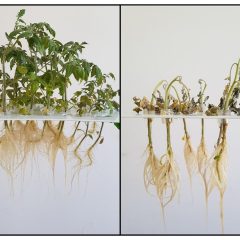
We develop species distribution models (MaxEnt and CLIMEX) to predict the potential establishment of several quarantine pests and pathogens threatening wetlands, including the plant-parasitic nematodes Meloidogyne graminicola and Hirschmanniella spp., freshwater snails (Pomacea spp.) and the plant-pathogenic bacterium Ralstonia pseudosolanacearum, under current and future climate scenarios. High-risk areas characterised by frequent flooding or high host-plant density will be identified. Surveys will identify vulnerable habitats and key pathways for introduction via aquatic plants and the aquarium trade. Innovative molecular detection tools, including LAMP, (q)PCR and eDNA-based diagnostics, will be developed and validated. The project will deliver a risk-based monitoring plan to support early detection by FASFC.
Relevance/Valorization
This project delivers essential knowledge for safeguarding Belgian wetlands against emerging quarantine pests. By mapping current and future establishment risks through species distribution models, it identifies hotspots where surveillance and mitigation are most needed. Field surveys will clarify vulnerable habitats and key pathways for the introduction of quarantine organisms via aquatic plants and the aquarium trade. The development of rapid, sensitive molecular diagnostics strengthens operational capacity for early detection. Together, these outputs support FASFC in implementing a risk-based monitoring strategy, improving preparedness and reducing the likelihood of pest introduction and spread in Belgium.
Financing
FOD Volksgezondheid, Veiligheid van de voedselketen en Leefmilieu