Research project Detection and remediation of soil compaction


General introduction
The aim of the DEREBO project is to identify a reliable, efficient method for assessing the degree of soil compaction at the field level, as well as the spatial distribution of soil compaction on the field. At the same time, the project is examining the effect of (a combination of) innovative soil management measures designed to sustainably remediate soil compaction.
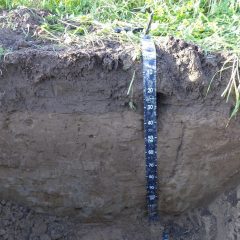
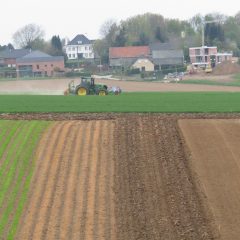
A recent European study estimates that between 25 and 52% of Flemish agricultural soils are problematically compacted in the subsoil (30–60 cm) (Harbo et al. 2025). This compaction is caused by the use of heavy agricultural machinery under wet conditions. The consequences include a reduction in the soil’s production capacity, decreased water-holding capacity, and an increased risk of nutrient and pesticide leaching and runoff. Carbon sequestration and soil biodiversity are also put under pressure as a result. Flanders appears to be particularly vulnerable due to the increased proportion of crops harvested late in the fall (maize and potatoes) and the many small fields with a relatively larger proportion of headlands where machinery turns around.
Research approach
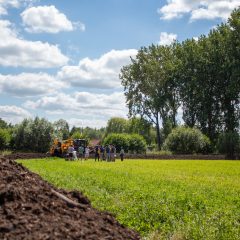
The researchers integrate existing remote and proximal sensing techniques to determine and visualize the extent of, and spatial distribution of, soil compaction at the plot level. They are using data from field trials used to test various soil management measures to gain the necessary insights into remedies for soil compaction. Measurements taken on farmers’ fields are also being utilized. Early farmer participation has been chosen as deliberate strategy. The potential measures are consistently assessed against the socioeconomic realities of the agricultural sector. Through participatory workshops that examine the technical and economic impacts of anti-compaction strategies and combinations of innovative soil management measures, the researchers aim to promote real changes in agricultural practices.
Relevance/Valorization
We expect to gain empirical insight into which techniques are best suited for detecting soil compaction at the plot level and remediating it in a sustainable manner. The likelihood that farmers will adopt these innovative techniques has been maximized through their involvement in the research process. Effective remediation of soil compaction also has significant benefits: the preservation or restoration of soil quality, improved water storage in the soil, and consequently a reduced risk of erosion, flooding, and/or mudslides, as well as a reduction in N2O emissions. Both improved water storage and supply and the reduction of N2O emissions also contribute to achieving Sustainable Development Goal (Sustainable Development Goal or SDG) 13 (climate action) of the www.sdgs.be (www.sdgs.be) and the operational goals for water security in Flanders set by the Flemish Government and the EU’s Water Resilience Strategy.
Financing
VLAIO - Agentschap Innoveren & Ondernemen